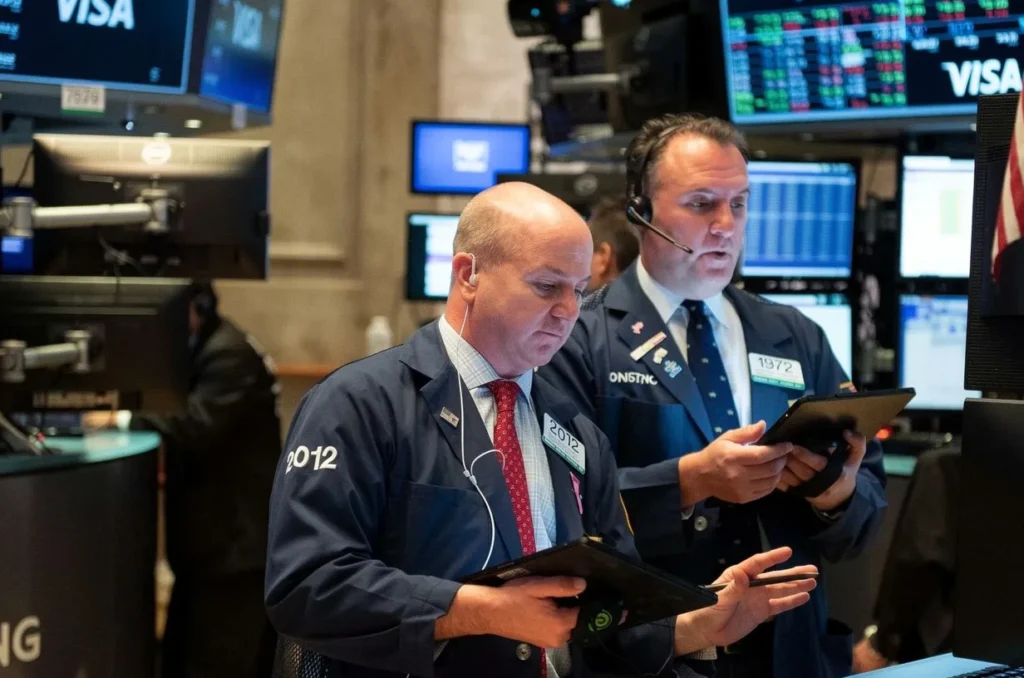
The chip trade rolled over again
Tuesday’s selloff made one thing clear: Monday’s bounce in semiconductors was not enough to reset sentiment.
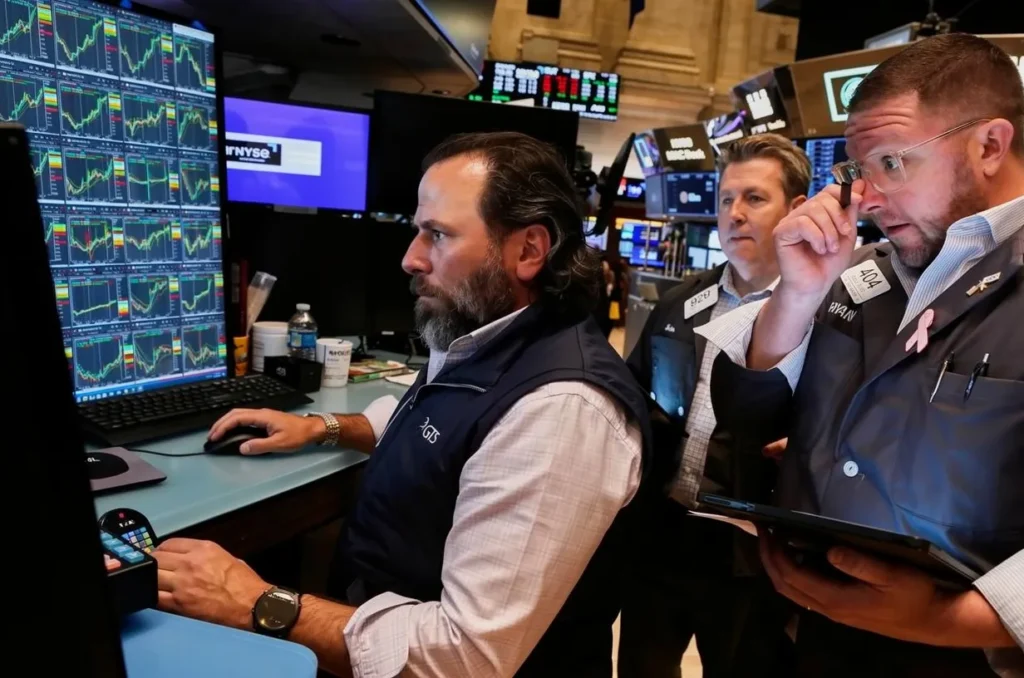
The S&P 500 fell more than 2%, the Nasdaq dropped 3.5%, and the Dow lost about 500 points as money came back out of the same chip and AI names that had led the market higher for months. Micron, Nvidia, and Broadcom all turned lower again, extending the rotation out of the most crowded part of the market.
This was not just another weak tech session. It was another sign that investors are becoming less willing to pay up for AI exposure while the rates backdrop remains difficult.
The Fed problem has not gone away
The market is still adjusting to the stronger economic data that hit late last week.
A stable labor market, stubborn inflation, and elevated oil prices leave the Federal Reserve in a harder position. Investors had spent much of the rally assuming strong earnings and AI demand could coexist with a more forgiving rate path. That assumption has weakened.
Now the market is treating expensive growth more cautiously, especially in semiconductors, where valuations had already stretched far ahead of near-term certainty.
The Iran story came back into the tape
The geopolitical backdrop worsened again during the session.
Hours after the US president said peace talks were still on track, the White House said the US would respond after Iran attacked an American military helicopter near the Strait of Hormuz. The Apache went down off the coast of Oman, though both pilots were recovered safely.
That immediately pulled the Middle East back to the center of the market story.
Oil prices initially fell earlier in the day, but pared losses sharply after the White House response. Brent still traded lower near $91.50, while WTI hovered around $88, but the message from the oil market was straightforward: traders are not willing to price out regional risk too aggressively.
Diplomacy is still live, but the market trusts it less
The bigger issue is not whether talks still exist. It is whether the market believes they can actually produce durable stability.
Iranian officials signaled again that they are prepared to escalate if Washington breaks commitments, while the White House continues to insist diplomacy remains the preferred path. That leaves crude and risk assets trapped between two possibilities: a negotiated off-ramp or another sharp escalation through Hormuz.
For equities, that kind of backdrop is enough to keep pressure on already stretched sectors.
Housing was one of the few brighter spots
One counterpoint came from housing.
Existing home sales rose 3.2% in May from a year earlier to a seasonally adjusted annual rate of 4.17 million, one of the strongest readings in the last three years. That suggests buyers are still willing to step into the market despite elevated mortgage rates and a noisy macro backdrop.
It is a constructive signal for the economy. It was not enough to offset the much larger pressure coming from tech and geopolitics.
SpaceX and OpenAI are becoming part of the market calculus
Another reason the tape remains uneasy is the capital-markets calendar ahead.
SpaceX is expected to make its market debut on Friday in what could become the largest IPO ever. OpenAI has also now confidentially filed to go public, following Anthropic down the same path. That means investors are not just dealing with a rotation inside existing AI names. They are also starting to think about how much new supply the market may soon need to absorb.
That matters most when the current leadership trade is already losing momentum.
WSA Take
Tuesday’s selloff was not just about one sector having a bad day. It was the market repricing several problems at once.
Chip stocks are no longer getting a free pass on valuation. The Fed still has little room to turn easier if inflation stays elevated. The Middle East remains unstable enough to keep oil and risk sentiment on edge. Add in the coming wave of AI-linked IPOs, and the market suddenly has more competition for capital at the same time it has less tolerance for disappointment.
That is a tougher setup than the indexes had been pricing.
Explore More Stories in Markets
Disclaimer
WallStAccess is a financial media platform providing market commentary and analysis for informational and educational purposes only. This content does not constitute investment advice, a recommendation, or an offer to buy or sell any securities. Readers should conduct their own research or consult a licensed financial professional before making investment decisions.