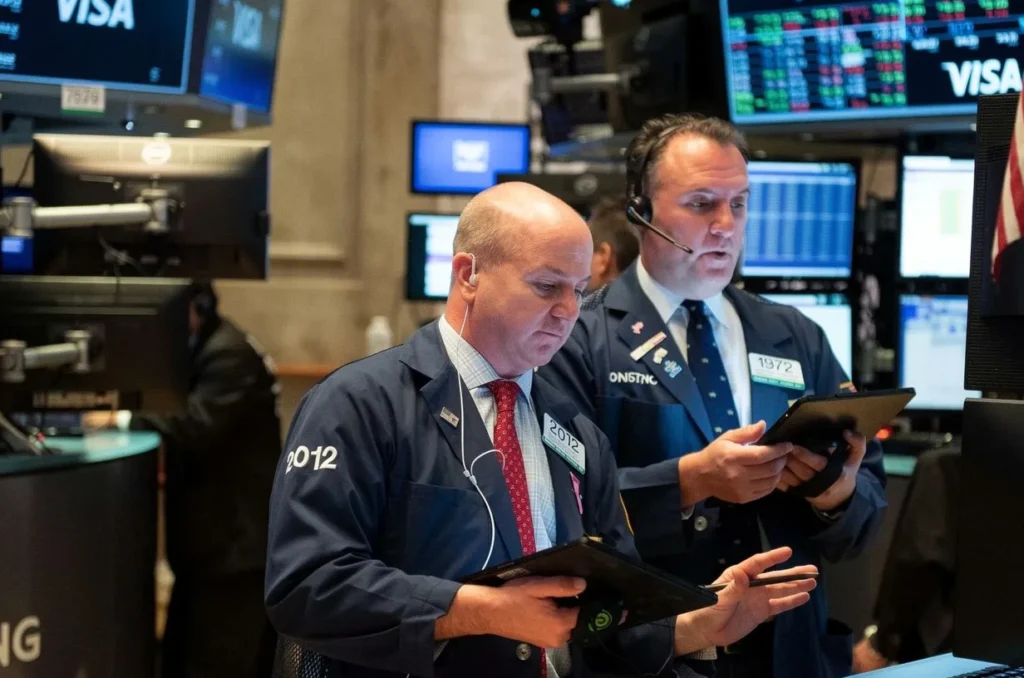
Tech stocks regained leadership after a volatile stretch
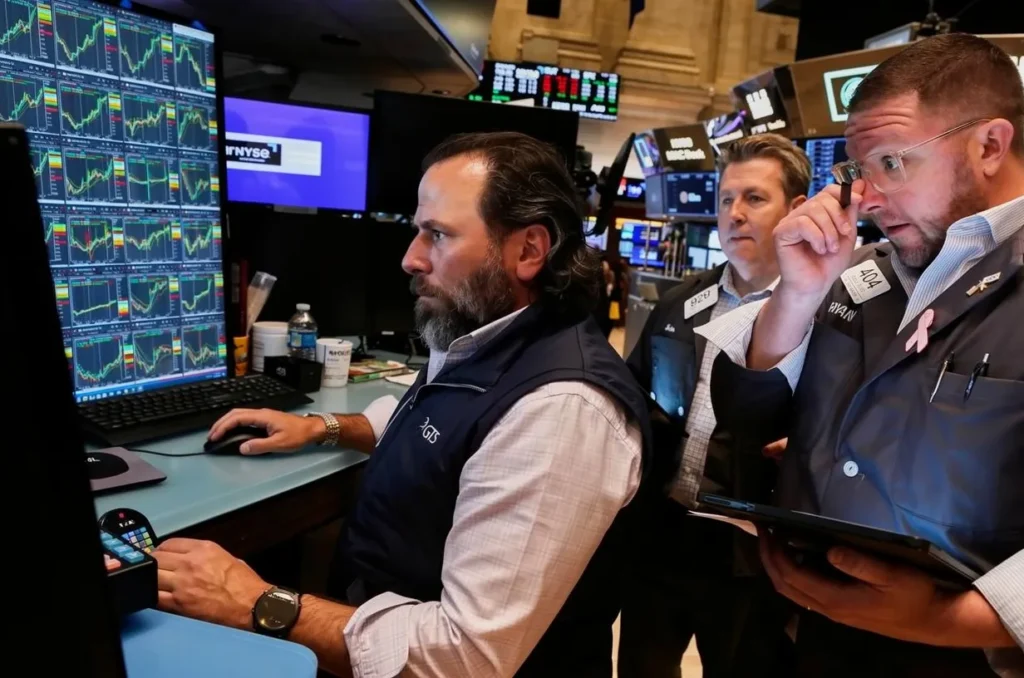
US stocks were mixed Monday, but the message beneath the surface was clear: investors were willing to move back into technology after several weeks of pressure on the AI trade.
The Nasdaq Composite climbed roughly 1.1%, leading the major indexes higher. The S&P 500 added around 0.5%, supported by strength in technology and semiconductor shares. The Dow Jones Industrial Average slipped slightly after briefly trading near record territory.
The session followed a holiday-shortened week in which the Dow set fresh highs and broader markets recovered from late-June weakness. That earlier pullback was concentrated in chip stocks, memory suppliers and other companies tied to artificial intelligence infrastructure.
Monday’s rebound showed that investors have not abandoned the AI trade. They are becoming more selective, but they are still responding strongly to evidence that demand remains intact.
Foxconn gave the market a fresh AI demand signal
The most important catalyst came from Foxconn, formally known as Hon Hai Precision Industry.
The world’s largest contract electronics manufacturer reported a 39.8% year-over-year increase in second-quarter revenue, beating market expectations. Foxconn is a major supplier to Nvidia and one of the largest assemblers of AI servers.
The company said demand for AI products drove strong growth in its cloud and networking division. June revenue also reached a record for that month, rising more than 50% from a year earlier.
That mattered because the recent chip selloff was not driven by weak current demand. It was driven by fear that valuations had moved too far ahead of future AI infrastructure spending.
Foxconn’s report helped counter that concern. The data showed that cloud and AI hardware orders are still flowing through the supply chain.
The chip rebound was broad
Semiconductors led Monday’s market move.
The Philadelphia Semiconductor Index rose sharply after two consecutive losing sessions, while several memory and equipment names recovered from recent weakness.
The bounce came after a difficult stretch for the group. Investors had become concerned about rising memory costs, stretched valuations, potential delays in AI financing and the ability of large cloud companies to justify enormous capital-expenditure plans.
Those concerns have not disappeared.
The difference Monday was that investors received a fresh data point showing that AI demand remains strong at the manufacturing level. That gave the market a reason to buy back into names that had sold off quickly.
A rebound in chip stocks is especially important for the Nasdaq because semiconductor companies remain one of the index’s largest sources of momentum.
Samsung is the next major test
Attention now turns to Samsung Electronics, which is expected to release preliminary second-quarter results on Tuesday.
The world’s largest memory-chip maker is projected to report an operating profit of roughly 86 trillion won, an increase of about 18 times from the prior year.
That expected surge reflects one of the strongest memory markets in years.
Demand for high-bandwidth memory, conventional DRAM and NAND storage has accelerated as AI inference workloads expand. Data centres require more memory and storage as models become more complex and applications move from training into real-world use.
Samsung’s report will help determine whether Monday’s chip rally has staying power.
A strong result could reinforce the view that memory shortages and AI demand remain powerful enough to support elevated valuations. Any disappointment would likely bring back concerns that the sector has already priced in too much good news.
Memory remains the centre of the AI supply chain
The AI trade has shifted from being almost entirely about processors to being about the full data-centre system.
Advanced GPUs remain essential, but they cannot function efficiently without memory, networking, storage, power equipment and cooling systems. That is why investors are watching companies such as Samsung, SK Hynix, Micron, Foxconn, Broadcom and semiconductor-equipment suppliers so closely.
Memory has become one of the tightest parts of the supply chain.
High-bandwidth memory is required for leading AI accelerators. Conventional DRAM and NAND are also in greater demand as inference workloads expand across cloud services, enterprise systems and connected devices.
Higher memory prices are benefiting producers. They are also raising costs for consumer electronics, automakers and other manufacturers.
That tension is now central to the next phase of the semiconductor cycle.
Oil remained contained despite OPEC+ supply changes
Oil prices were little changed Monday, holding near levels seen before the Iran war.
OPEC+ agreed to raise output targets by 188,000 barrels per day from August, adding to earlier increases for June and July. At the same time, exports through the Strait of Hormuz continued recovering after the reopening of the crucial waterway.
Brent crude traded around $72 a barrel, while West Texas Intermediate hovered below $69.
Lower and more stable oil prices are important for equity markets because energy was one of the main channels through which the Iran conflict threatened the global economy.
A renewed spike in crude would raise transportation, manufacturing and household costs. It would also complicate the Federal Reserve’s inflation fight and increase pressure on corporate margins.
For now, the market is treating the Gulf supply recovery as a stabilizing force.
The US-Iran peace process remains the largest macro risk
The recovery in oil flows does not eliminate geopolitical risk.
The US-Iran memorandum that allowed shipping through the Strait of Hormuz to resume remains fragile. A durable agreement would keep energy prices contained, reduce inflation pressure and give central banks more flexibility.
A breakdown would move markets in the opposite direction.
Higher oil prices would revive inflation fears, increase input costs for manufacturers and raise the probability of additional Fed tightening. The effect would be especially important for technology because AI infrastructure depends on global supply chains, power-intensive data centres and large capital budgets.
A stable Gulf reduces pressure across all of those areas. A renewed disruption would quickly reconnect energy, inflation, rates and AI supply-chain risk.
That is why the Middle East remains one of the most important market variables for the second half of the year.
Services data showed steady but uneven growth
US services activity remained in expansion territory in June.
The Institute for Supply Management’s services index came in at 54.0, slightly below May’s 54.5 but still comfortably above the 50 level that separates expansion from contraction.
Employment improved after several months of weakness, while activity and new orders continued to support growth. The report also showed that price pressures remain elevated, with companies still dealing with tariffs, material costs and supply-chain constraints.
The data was not strong enough to reignite fears of an overheated economy. It was also not weak enough to suggest an immediate downturn.
For markets, that balance was helpful.
A services sector that continues expanding at a moderate pace gives investors confidence in earnings while reducing the urgency of another rate hike.
The jobs report changed the rate conversation
Monday’s trading also reflected the aftermath of last week’s weaker-than-expected June jobs report.
Payroll growth slowed sharply, and investors reduced expectations for an imminent Fed rate increase. That helped technology shares because lower expected rates support the valuations of long-duration growth companies.
The Federal Reserve remains cautious.
At its June meeting, the central bank held the federal-funds target range at 3.5% to 3.75%. Policymakers noted that economic activity was expanding at a solid pace, but inflation remained elevated and partly affected by energy-related supply shocks.
The minutes from that meeting are due Wednesday.
Investors will look for clues about how Chair Kevin Warsh and the rest of the committee are weighing weaker labour data against still-elevated inflation.
Fed minutes may matter less than the data
The upcoming minutes could provide insight into the central bank’s internal debate, but investors may not receive a clear policy signal.
Warsh has emphasized a more data-dependent and less forward-guidance-heavy approach. That means markets may need to focus more on incoming inflation, employment and wage data than on detailed Fed projections.
For equities, the practical question is whether the Fed can remain on hold.
A stable rate environment would support the recovery in technology and small caps. Another hike would raise the discount rate applied to future earnings and could pressure companies with high capital spending needs.
AI infrastructure is especially sensitive to that debate because the buildout requires enormous upfront investment in chips, servers, networking equipment, land, power and data-centre construction.
Breadth remains important
Monday’s gains were led by technology, but investors are still watching whether the rally can broaden.
Healthcare, industrials and financials have recently provided support during periods when chip stocks weakened. That helped prevent the late-June pullback from turning into a deeper market decline.
A sustainable rally would likely need both ingredients: renewed strength in AI-linked technology and continued participation from defensive and cyclical sectors.
The S&P 500 is less vulnerable when gains are not concentrated in a handful of megacap companies.
The market’s recent rotation showed that investors are willing to move into other areas when technology weakens. Monday’s session showed they are also ready to return to semiconductors when the data supports the trade.
Earnings season becomes the next market test
Second-quarter earnings season begins later this week, with investors looking first to companies such as Delta Air Lines and PepsiCo before the major banks and technology platforms report later in July.
For technology, the most important questions will be capital spending and AI monetization.
Investors want confirmation that cloud providers are still building aggressively, but they also want evidence that AI services are generating revenue and improving margins.
For semiconductor companies, the market will focus on order visibility, memory pricing, supply constraints and commentary on 2027 demand.
The chip trade can continue if earnings support the scale of investment already reflected in stock prices. It becomes more vulnerable if companies start discussing slower data-centre spending or delayed customer projects.
WSA Take
Monday’s market showed that the AI trade is still alive, but the bar is higher than it was earlier in the year.
Foxconn’s revenue beat gave investors evidence that AI server demand remains strong, and that was enough to pull capital back into semiconductors. Samsung’s earnings will now test whether the memory boom is as durable as the market expects.
Oil stability also helped. The recovery in Strait of Hormuz flows has reduced the inflation risk that dominated markets during the Iran conflict. That gives equities more room to respond to earnings and AI demand rather than crude prices alone.
The Fed remains the swing factor. A weaker jobs report lowered the odds of an immediate hike, but inflation has not returned to target. Wednesday’s minutes may not settle the debate.
For now, technology has regained momentum. The next move depends on whether Samsung, chip suppliers and the major cloud platforms can prove that AI spending is still translating into real revenue.
Explore More Stories in Markets
Disclaimer
WallStAccess is a financial media platform providing market commentary and analysis for informational and educational purposes only. This content does not constitute investment advice, a recommendation, or an offer to buy or sell any securities. Readers should conduct their own research or consult a licensed financial professional before making investment decisions.