
AMD’s data-center sales nearly doubled. Two days later, its stock was down about 16%.
The chipmaker reported $8.5 billion in quarterly data-center revenue on Tuesday. By 11 a.m. ET Thursday, the Nasdaq Composite had fallen about 5% and the Philadelphia Semiconductor Index was down nearly 11%. The S&P 500 fell 3.2%, erasing Wednesday’s post-election gain, while the Dow gave back most of its rally with a drop of about 2.2%. AMD earnings · Thursday market data · Associated Press
The election put data-center permits back in focus
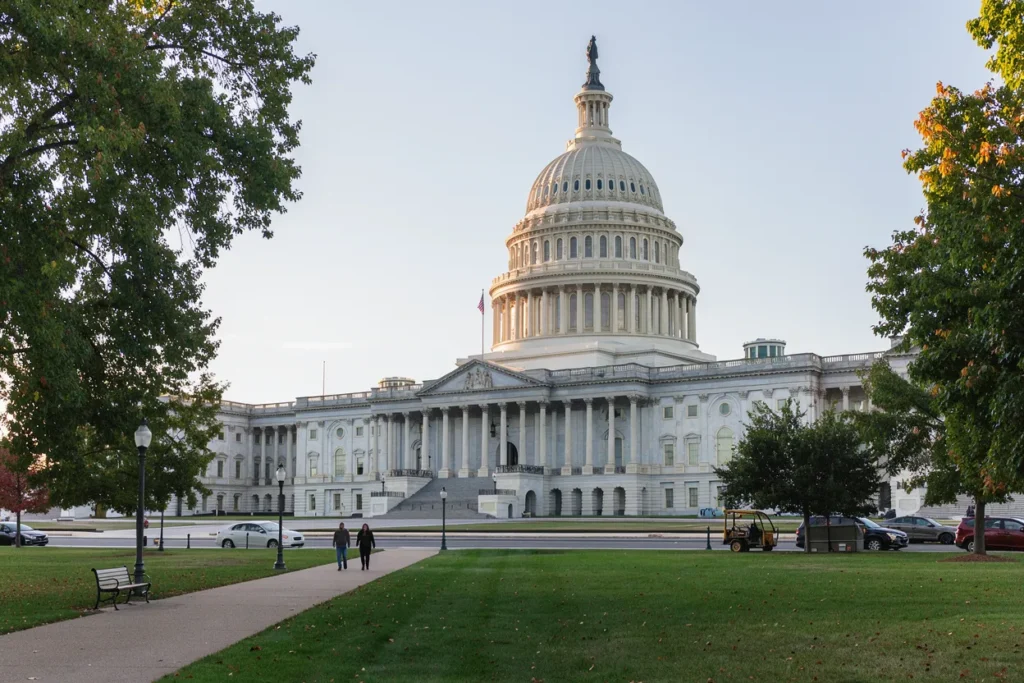
Qualcomm missed expectations for smartphone chip sales, and oil rebounded after Wednesday’s drop. The midterms raised a separate question for the AI trade. Democrats won both chambers of Congress, while candidates who campaigned on tighter data-center permitting won governorships in Texas, Georgia and Ohio. For chip suppliers, those state races could have a more direct effect on when new campuses open. Market coverage · Election results · Data-center permitting
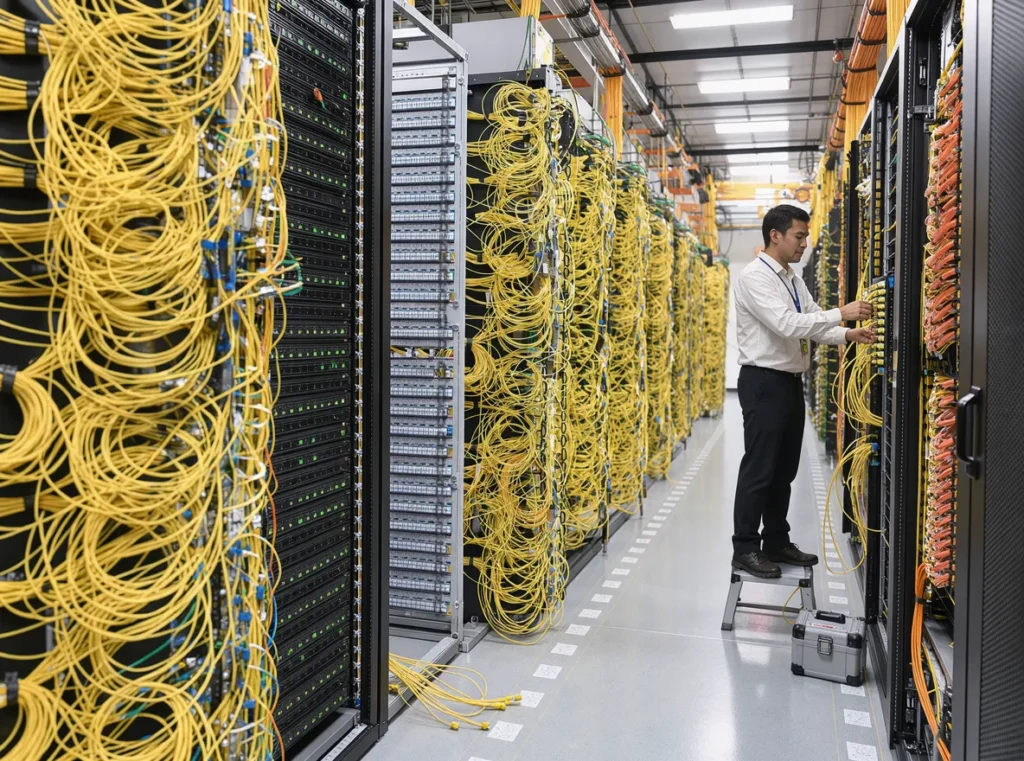
AMD’s quarter shows how much demand is already turning into sales. The open question is how quickly customers can turn the next round of spending into working data centers. That depends in part on how much power they can secure, when they can get it and who pays for the upgrades.
Who pays to connect the next data center?
A large campus can require a new substation, transmission lines or additional generation. If a developer scales back after the utility builds that infrastructure, someone still has to pay for it.
Ohio offers a look at how that risk can shift. Under a tariff regulators approved in 2025, AEP Ohio’s largest new data-center customers can face minimum charges based on 85% of their contracted power capacity, even if they use less. The terms can run for up to 12 years. For developers, that means committing to part of the power bill years before they know how much computing capacity customers will actually use. Ohio Consumers’ Counsel · AEP tariff summary
Congress was already debating the same issue before the election. The House passed the Ratepayer Protection Act 417–3 in September. The bill would have required state regulators and certain utilities to consider making large data centers cover the added grid costs of serving them. It drew 57 votes in the Senate, three short of what it needed to advance. The incoming Congress can revisit the issue, while state regulators can already set terms of their own. Bill text · Senate vote · House vote
Subscribe to Wall Street Access for AI Equity Reports
Grid equipment can get ordered years before chips go live
American Electric Power (AEP) said it signed 15 gigawatts of new load commitments in the third quarter. Its tally includes signed electric-service agreements and letters of agreement. The utility still has to deliver the power, and it plans to spend about $37 billion on transmission and $36 billion on generation through 2031. AEP third-quarter results
That’s where we see the investment case becoming more selective. A chip supplier tied to a financed campus with a firm power date has a clearer path to revenue than one relying on projects still negotiating grid access. Suppliers of transformers and substation equipment operate on an earlier schedule. Their orders can come in while the first server racks are still years away from going live.
The next time a developer announces a billion-dollar campus, look for the date the utility expects to deliver power. That date helps put the chip orders on a calendar.
Explore More Stories in Markets
Disclaimer
Wall Street Access is an independent financial publisher. Wall Street Access is not a financial advisor. No company mentioned has compensated Wall Street Access for the preparation, publication or distribution of this article. This content is provided for informational and educational purposes only and is not investment advice or a recommendation to buy, sell or hold any security. Investing involves risk, including the possible loss of principal.
Prices, market capitalizations, financial figures and other market data are based on information available as of the date and time of publication and may change without notice. Information is drawn from public sources believed to be reliable but is not guaranteed to be complete or accurate. Opinions and expectations expressed are our own and may change as new information becomes available.
Readers should conduct their own due diligence and contact a licensed financial professional before making any investment decision. Past performance does not guarantee future results. Any material ownership interest or conflict of interest, where applicable, will be disclosed separately.