AI’s power problem is creating some unexpected opportunities
A few years ago, connecting aluminum scrap with artificial intelligence would have sounded like a stretch.
Today, it deserves a closer look.
California startup Voya Energy has raised $35 million to develop generators that use recycled aluminum to provide backup electricity for data centers. The financing attracted a serious group of investors, including Energy Impact Partners, John Doerr, Founders Fund, StepStone and others.
Voya wants to challenge the diesel generators currently sitting behind most large data centers. Those generators are reliable, but they are also noisy, polluting and increasingly difficult to fit into the cleaner image developers want when proposing massive new AI campuses.
Voya believes aluminum can do the same job without burning fossil fuels.
We think the idea is interesting—not because aluminum is suddenly the next great AI commodity, but because power reliability is becoming one of the biggest constraints on the AI buildout.
Every new solution to that problem deserves attention.
The technology is easier to understand than it sounds
Voya does not burn aluminum.
Its system feeds recycled aluminum into a chemical solution, triggering an electrochemical reaction that releases electricity. The company says the process produces no carbon emissions at the point of use while operating more quietly and taking up less space than diesel equipment.
The target market also makes sense.
Backup generators don’t need to provide cheap electricity every hour of the year. Most sit idle until the grid fails, so data-center operators care heavily about reliability, footprint and the ability to turn on when everything else goes wrong.
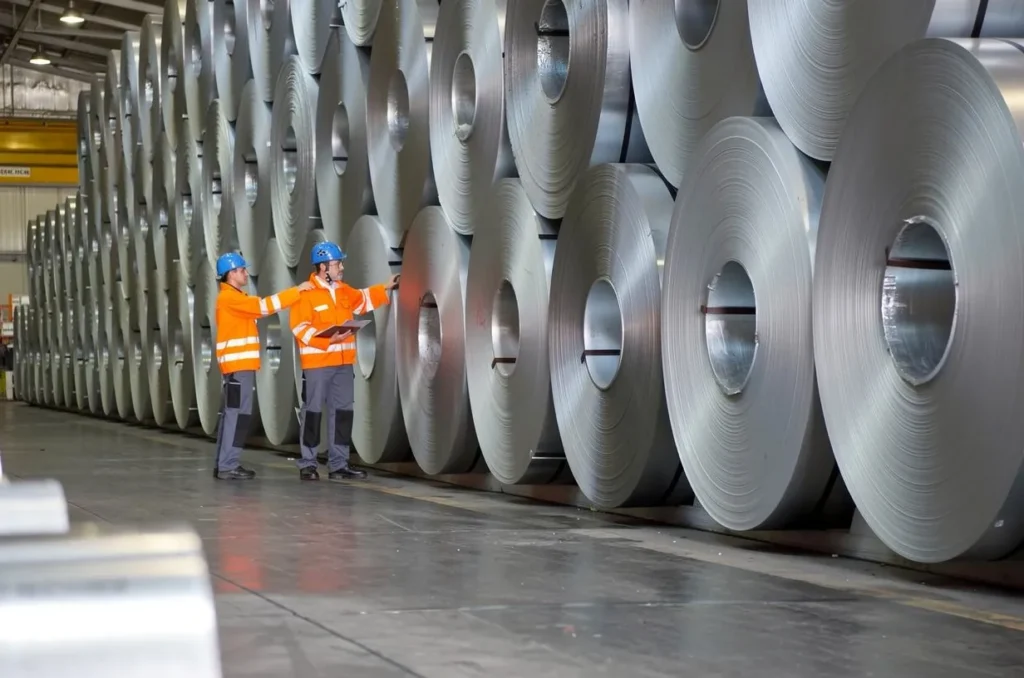
Voya plans to use low-grade aluminum scrap, rather than competing for higher-value material used in industries such as transportation or manufacturing.
For the concept to work commercially, a few things need to come together:
- The generators must perform reliably outside the laboratory
- Low-grade aluminum feedstock needs to remain economical and available
- Hardware and maintenance costs must compete with diesel
- Operators need to believe the environmental benefits justify adopting an unfamiliar technology
Nearly a dozen data centers, utilities and industrial manufacturers have already agreed to participate in pilot demonstrations, according to the company.
Those pilots are where the story becomes real.
We would not call aluminum an AI metal yet
Copper has a direct connection to AI infrastructure. Data centers need wiring, transformers, substations and grid expansion, all of which consume large amounts of copper.
Aluminum’s connection here is much more speculative.
One startup developing an aluminum-powered generator does not suddenly create a new structural demand source for the global aluminum market. Voya remains private, its technology has not been demonstrated commercially, and site testing is not expected until the end of 2027.
So we would not chase aluminum producers because of this announcement.
What catches our attention instead is the direction AI infrastructure is moving.
The investment opportunity started with GPUs. It expanded into networking equipment, cooling systems, electricity generation, transformers and data-center construction. Backup power is another piece of the same puzzle.
AI spending increasingly rewards companies that solve physical bottlenecks, not simply companies that put “AI” somewhere in their presentation.
That is the theme worth following.
The energy-storage angle could become bigger than data centers
There is also a more ambitious idea buried inside Voya’s technology.
Aluminum takes enormous amounts of electricity to produce. Voya effectively wants to capture some of that embedded energy later, allowing aluminum produced in one region to become a transportable source of electricity somewhere else.
CEO Richard Wang described the concept as a way of moving energy to places where power is not readily available.
If the economics eventually work, backup data centers may only be the starting market.
Remote industrial operations, weak-grid regions and other facilities requiring dependable emergency power could theoretically use the same concept.
We aren’t assigning much weight to those possibilities yet. The company first needs to prove a much simpler proposition: can an aluminum-powered generator work reliably and economically at an actual customer site?
2027 is when we will start paying much closer attention
For now, Voya belongs on our technology watchlist rather than our list of investable AI themes.
The $35 million financing is meaningful. The venture backers are credible. Nearly a dozen pilot relationships suggest potential customers are willing to test the product.
But prototypes don’t displace diesel generators.
Commercial systems do.
The first field deployments expected by the end of 2027 should begin answering the questions that matter: operating cost, reliability, system life, scrap consumption and whether customers actually want more units after testing them.
If those numbers work, our interest changes quickly.
At that point, the opportunity may extend beyond Voya itself. Aluminum recyclers, specialized equipment suppliers and other companies connected to the technology could become worth examining.
Until then, we see the story as another useful signal from the AI boom.
The shortage isn’t only chips anymore. It’s reliable power—and increasingly, almost any credible way to provide it is attracting capital.
That’s the trend we’re watching.
Explore More Stories in Commodities
Disclaimer
Wall Street Access is an independent financial publisher. Wall Street Access is not a financial advisor. No company mentioned has compensated Wall Street Access for the preparation, publication or distribution of this article. This content is provided for informational and educational purposes only and is not investment advice or a recommendation to buy, sell or hold any security. Investing involves risk, including the possible loss of principal.
Prices, market capitalizations, financial figures and other market data are based on information available as of the date and time of publication and may change without notice. Information is drawn from public sources believed to be reliable but is not guaranteed to be complete or accurate. Opinions and expectations expressed are our own and may change as new information becomes available.
Readers should conduct their own due diligence and contact a licensed financial professional before making any investment decision. Past performance does not guarantee future results. Any material ownership interest or conflict of interest, where applicable, will be disclosed separately.