
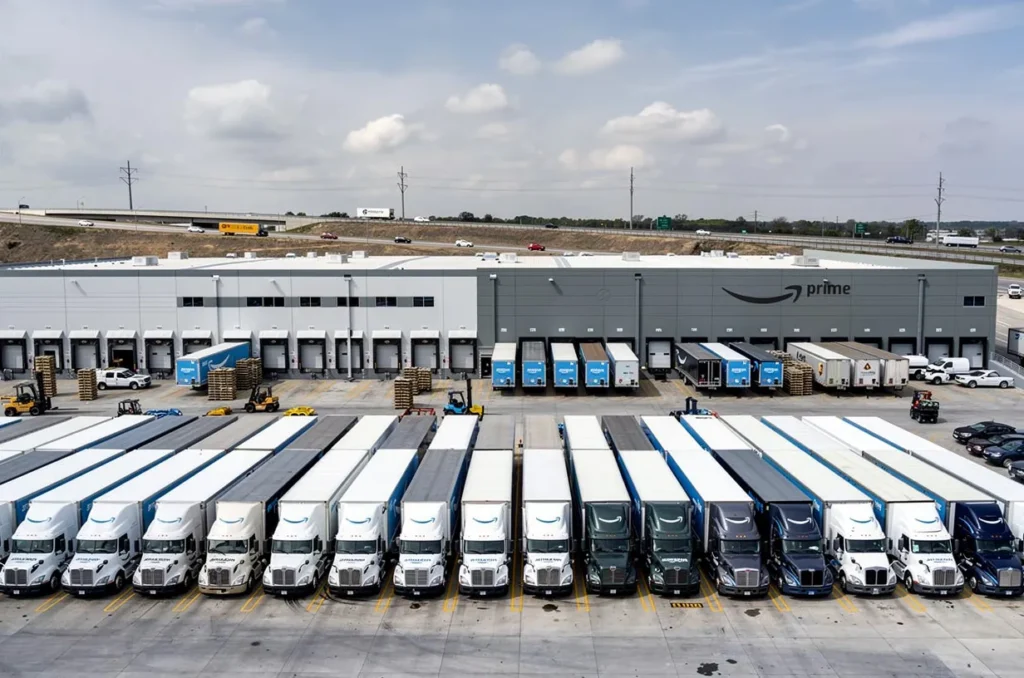
Amazon just widened the lane
Amazon said it will now offer its less-than-truckload, or LTL, shipping service to all businesses, not just merchants moving goods into Amazon facilities. The service will be available for freight moving to destinations across the US as part of the company’s expanding Amazon Supply Chain Services platform.
That is a meaningful step. Amazon is no longer just building freight tools to support its own marketplace and fulfillment network. It is offering those tools directly into the broader logistics market.
Freight stocks reacted immediately
The market read the announcement as another competitive threat to traditional carriers.
Old Dominion Freight Line fell more than 6%. Saia and XPO each dropped about 5%, while ArcBest fell roughly 4%. FedEx Freight, which only recently began trading as a standalone company after being spun off from FedEx, also moved lower.
The selloff made sense. Investors were not reacting to one new service launch in isolation. They were reacting to the steady expansion of Amazon’s logistics footprint into categories that were once clearly controlled by incumbents.
Amazon is commercializing infrastructure it already built
That is the real story here.
Amazon spent years building a logistics machine large enough to support its own delivery speed, inventory flows, and fulfillment economics. That buildout now includes:
- a fleet of Amazon cargo planes
- tens of thousands of delivery vans
- about 80,000 trailers
- roughly 24,000 containers
Once that scale is in place, the next move is obvious: monetize it more broadly.
Amazon has done this before. It built computing infrastructure for itself, then turned it into AWS. It built internal retail logistics, then began turning pieces of that into external services. This latest trucking move fits the same pattern.
LTL is not glamorous, but it matters
Less-than-truckload shipping may not get the same attention as consumer delivery or cloud computing, but it sits in a critical part of the freight market.
LTL allows multiple customers to share trailer space instead of paying for a full truckload. That makes it especially important for mid-sized shipments, regional freight flows, and businesses looking for more flexibility in distribution. If Amazon can gain real traction here, it does not need to dominate the entire freight market to create pricing pressure and margin stress for legacy operators.
That is enough to matter for public equities.
This is part of a broader logistics offensive
Amazon is not making this move in a vacuum.
Last month, the company rolled out an end-to-end supply chain service that bundled together multiple logistics offerings into a single package. That announcement also pressured shares of competitors including UPS and FedEx.
The pattern is becoming harder to ignore. Amazon keeps moving outward from its core network, turning internal capabilities into market-facing products one step at a time.
Why investors are paying attention
The threat is not just that Amazon enters another category. It is how it enters.
Unlike a startup trying to win share from scratch, Amazon comes into freight with scale, technology, data visibility, and a long record of sacrificing margin when it wants to build market position. That makes it a different kind of competitor for traditional carriers.
For the incumbents, the concern is not whether Amazon wins everything. It is whether Amazon becomes disruptive enough to pressure pricing, customer retention, and long-term growth assumptions.
WSA Take
Amazon’s trucking expansion is another reminder that the company’s logistics ambitions are no longer confined to supporting its own ecommerce machine.
The market sold freight names because it understands the direction of travel. Amazon keeps taking infrastructure it built for itself and turning it into a service for everyone else. That does not mean established freight players are suddenly broken. It does mean they are competing against a company with massive scale, deep pockets, and very little patience for traditional industry boundaries.
Explore More Stories in Markets
Disclaimer
WallStAccess is a financial media platform providing market commentary and analysis for informational and educational purposes only. This content does not constitute investment advice, a recommendation, or an offer to buy or sell any securities. Readers should conduct their own research or consult a licensed financial professional before making investment decisions.