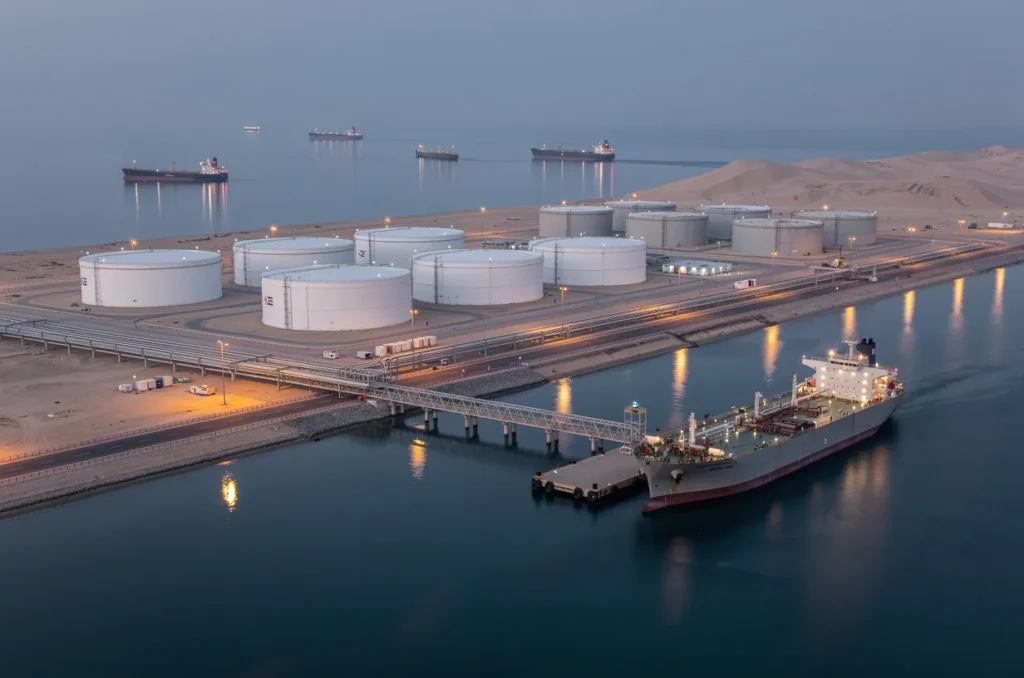
The oil market reacted first to the headline, then to the contradictions
Oil moved sharply lower Friday after Pakistan’s prime minister said the United States and Iran had reached the final draft of a peace deal.
By early afternoon, US crude was down 3.6% to $84.57 a barrel and Brent had fallen 3.6% to $87.09. At the session low, prices had been off by about 5% as traders responded to the idea that the war may finally be moving toward a formal settlement.
The initial move made sense. If a binding agreement is close, the market starts pulling out part of the geopolitical premium that has been built into crude through the conflict.
Pakistan tried to settle the narrative
The key headline came from Pakistan Prime Minister Shehbaz Sharif, who said a final agreed text had been reached and that Pakistan was now working with both sides on the next steps.
He also pushed back against what he described as a misinformation campaign designed to undermine the negotiations, saying peace had never been closer.
That was the clearest positive signal the oil market received all day.
Washington then complicated the picture
The price action did not stay one-directional because the political messaging did not stay clean.
The US president said Thursday that the war was essentially settled and that a deal could be signed within days. But Friday brought a more confrontational tone after Iranian state media released what it described as a draft agreement.
The White House rejected that version outright, with the US president saying the leaked terms had nothing to do with what had actually been agreed in writing.
That mattered because it reminded traders that even when both sides signal progress, there is still room for major disagreement over what a final deal actually contains.
The leaked Iranian draft raised immediate questions
According to the document published by Iranian state media, the US would withdraw forces from around Iran, lift its naval blockade within 30 days, and provide $300 billion in reconstruction support. Iran, in turn, would reopen the Strait of Hormuz on a 30-day timetable, but under arrangements set by Tehran.
Those terms immediately looked politically difficult from a US perspective, which helps explain why Washington rejected the leak so quickly.
For the oil market, the more important point was not whether that specific draft was real. It was that the leak exposed how much uncertainty still remains around the content of the agreement.
Tehran’s response was more measured
Iran’s foreign minister later signaled that a memorandum of understanding had never been closer, while also urging the media not to speculate on specific terms before finalization.
That was more constructive than the White House pushback, but it still stopped short of a signed deal.
As a result, traders were left in a familiar position: strong signs of progress, but not enough clarity to fully remove the risk premium.
The market is now trading the difference between “close” and “done”
That distinction is critical.
Oil is no longer reacting as if a full regional breakdown is the base case. But it is also not trading as if the war is definitively over. The remaining sensitivity sits in exactly that gap between a deal that appears close and a deal that is actually finalized, signed, and enforced.
That is why crude fell sharply on the Pakistan comments, then stayed volatile as the political messaging became less aligned.
Hormuz still matters more than the rhetoric
At the center of the move remains the same strategic issue: the Strait of Hormuz.
Any credible path toward reopening or normalizing traffic through the strait reduces one of the largest supply risks hanging over the market. Any sign that the issue remains unresolved keeps crude supported.
That is why the market is reacting so sharply to every update. The question is no longer only whether Washington and Tehran are talking. It is whether those talks are close enough to restore confidence in regional oil flows.
WSA Take
Friday’s selloff showed that the market is prepared to take a meaningful amount of premium out of crude if it believes a US-Iran agreement is close.
But the day’s conflicting signals also showed why the move stopped short of a full collapse. Pakistan’s comments pointed to a deal. Washington’s response to the leaked draft suggested major sensitivities still remain. Tehran’s language signaled progress, but not completion.
For now, oil is trading like peace is possible, not guaranteed.
Explore More Stories in Commodities
Disclaimer
WallStAccess is a financial media platform providing market commentary and analysis for informational and educational purposes only. This content does not constitute investment advice, a recommendation, or an offer to buy or sell any securities. Readers should conduct their own research or consult a licensed financial professional before making investment decisions.